
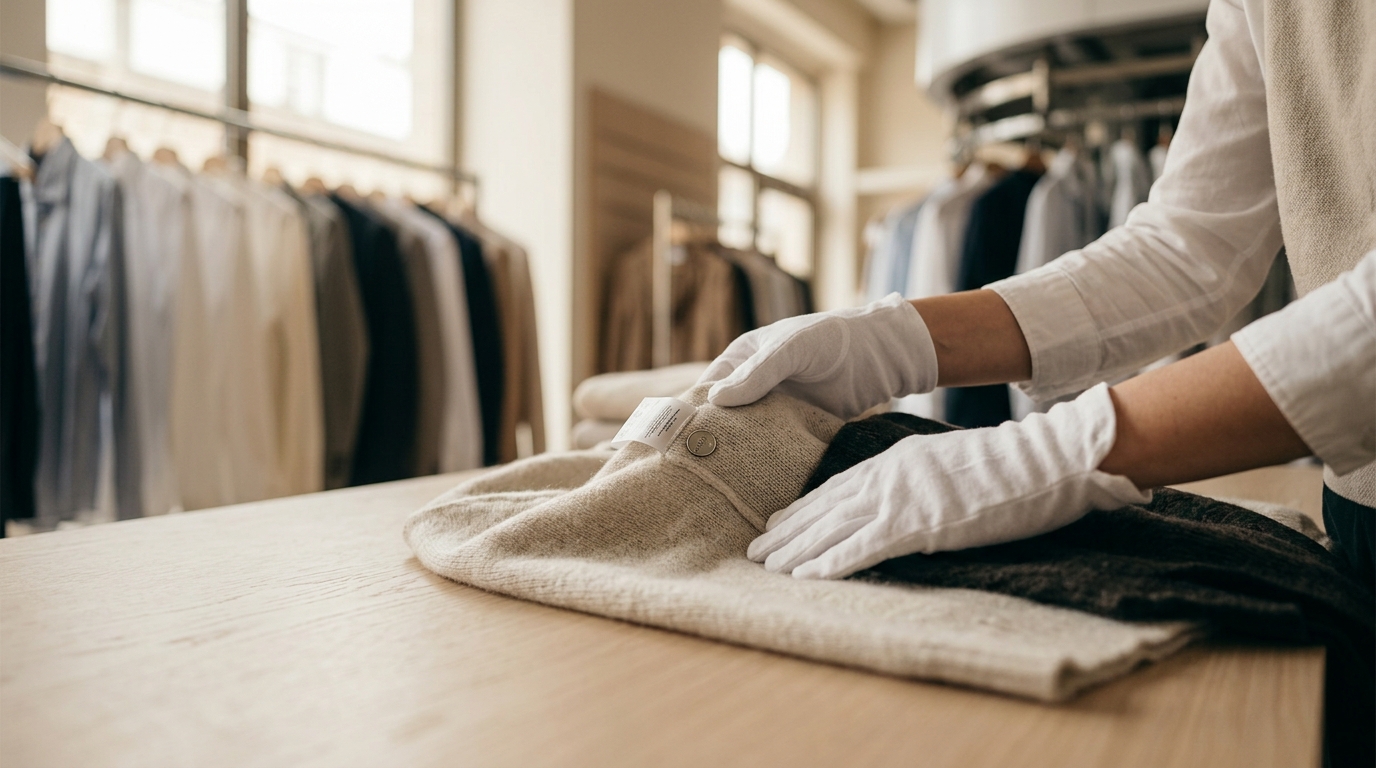
If you have ever stared at a care label and wondered whether your garment needs a standard wash or professional dry cleaning, you are not alone. The distinction matters more than most people realise, especially in Dubai and Abu Dhabi where heat, humidity, and sand can accelerate fabric wear. Choosing the wrong method can shrink a wool suit or fade a silk abaya in a single cycle. In this guide we break down exactly how standard laundry and professional dry cleaning differ, which fabrics suit each process, and when to trust the experts at Whites.
What Is Standard Laundry?
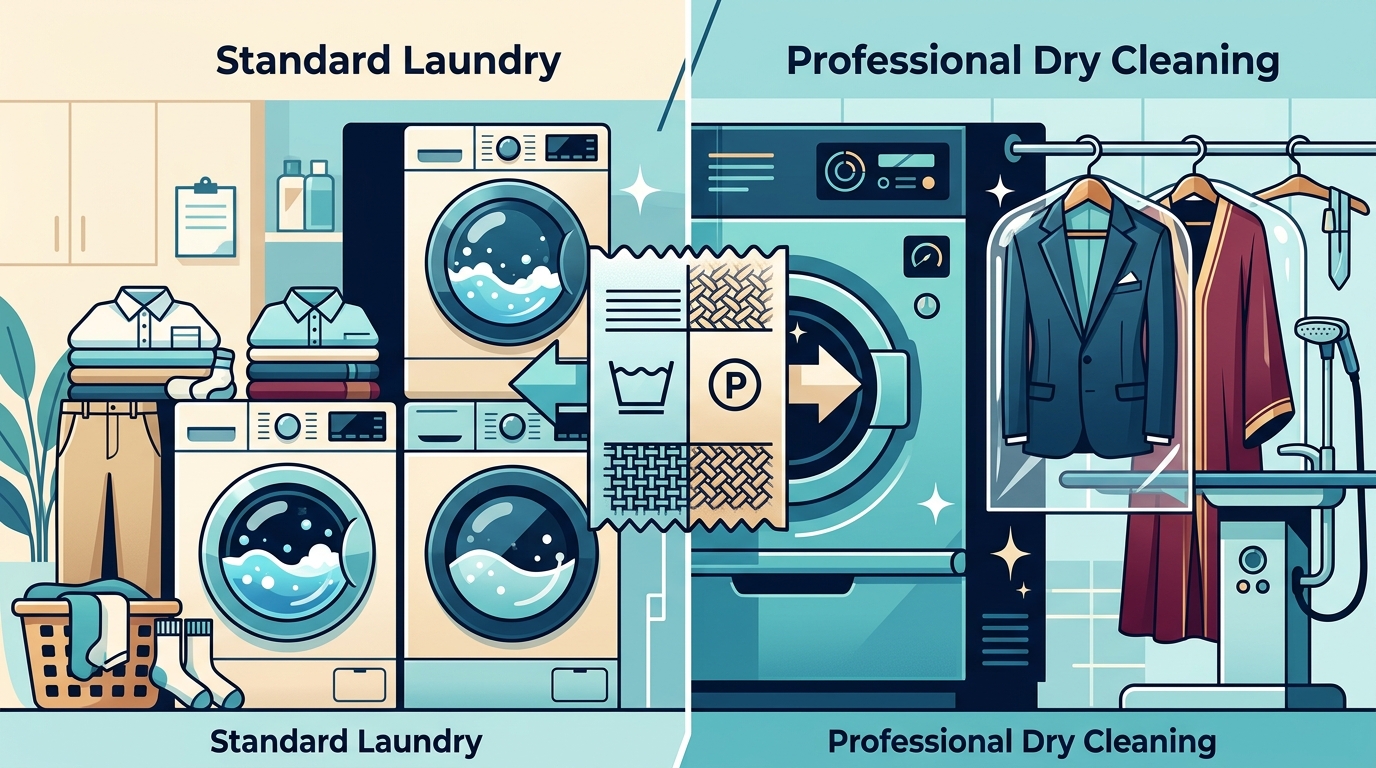
Standard laundry is the process of cleaning garments using water and detergent, either by hand or in a washing machine. It is the most common cleaning method worldwide and works well for everyday fabrics such as cotton, polyester, and denim. Professional laundry services add commercial-grade equipment, precise temperature controls, and expert pressing to deliver results far beyond what a home machine achieves.
At Whites, the WASH+FOLD Bag service handles a full week of daily clothing. Items are washed, dried, and folded so you can reclaim your weekends.
What Is Professional Dry Cleaning?
Dry cleaning is a specialised garment-care method that uses a liquid solvent instead of water to remove dirt, oils, and stains. Despite its name, the process is not entirely "dry"; clothes are immersed in a solvent bath inside a sealed machine. The solvent dissolves grease and grime without causing the shrinkage, colour bleeding, or structural damage that water can inflict on delicate fibres.
Professional dry cleaning also includes finishing steps like pressing and steaming that give garments a crisp, wrinkle-free appearance. It is ideal for suits, evening wear, silk blouses, and heavily embellished pieces.
Side-by-Side Comparison
| Factor | Standard Laundry | Professional Dry Cleaning |
|---|---|---|
| Cleaning agent | Water + detergent | Chemical solvent (no water) |
| Best for | Cotton, polyester, denim, linen | Silk, wool, cashmere, velvet, structured garments |
| Stain strength | Excellent on water-based stains (coffee, mud) | Superior on oil-based stains (grease, makeup) |
| Shrinkage risk | Higher for natural fibres | Minimal |
| Colour preservation | Moderate | High |
| Finish | Tumble-dried or line-dried | Professionally pressed and steamed |
| Turnaround at Whites | Next-day delivery | Next-day delivery |
Fabric-by-Fabric Guide
Fabrics Safe for Standard Laundry
Cotton, polyester, nylon, and denim are sturdy enough to handle water immersion and machine agitation. These fibres make up the majority of everyday wardrobes, including t-shirts, jeans, activewear, and bed linen.
Fabrics That Require Dry Cleaning
Silk, wool, cashmere, velvet, and suede need solvent-based cleaning to preserve texture and colour. Structured garments with interfacing or padding, such as blazers and tailored kanduras, also benefit from dry cleaning because water can warp their shape.
Special Items
Wedding dresses, couture gowns, and embellished abayas should always be dry cleaned. At Whites, our Bridal service provides museum-quality preservation for these once-in-a-lifetime pieces.
Eco-Friendly Cleaning in the UAE
Traditional dry cleaning solvents like perchloroethylene (perc) have raised environmental concerns. Modern alternatives are far gentler on the planet. Whites uses Lagoon technology by Electrolux, a wet-cleaning system that replaces up to 90 percent of conventional solvent-based work with biodegradable solutions. Packaging materials are recyclable, and the entire service cycle is designed with sustainability in mind.
If you care about reducing your carbon footprint while keeping garments pristine, choosing a provider with green credentials is a smart move.
When to Choose Each Method
Choose standard laundry for everyday items you wear frequently: gym clothes, casual shirts, underwear, towels, and children's uniforms. Water and detergent are excellent at eliminating body odour and water-soluble stains.
Choose dry cleaning for investment pieces: wool suits, silk dresses, cashmere sweaters, formal abayas, and anything labelled "dry clean only." Oil-based stains from cosmetics or cooking also respond better to solvent treatment.
When in doubt, check the care label. If the label is unclear, bring the garment to a professional. The Whites Care Label Geeks inspect every item before processing to ensure it receives the right treatment.
Key Takeaways
- Standard laundry uses water and detergent; dry cleaning uses a chemical solvent without water.
- Cotton, polyester, and denim are safe for machine washing. Silk, wool, and velvet require dry cleaning.
- Oil-based stains respond better to dry cleaning; water-based stains respond better to laundry.
- Modern eco-friendly technologies like Lagoon by Electrolux dramatically reduce solvent use.
- Always read care labels before cleaning any garment.
- Professional services like Whites offer next-day turnaround for both laundry and dry cleaning in Dubai and Abu Dhabi.
- Investing in the correct cleaning method extends garment lifespan by years.
Frequently Asked Questions
What is the main difference between laundry and dry cleaning?
The primary difference is the cleaning agent. Laundry uses water and detergent, while dry cleaning uses a liquid solvent. This makes dry cleaning safer for delicate and water-sensitive fabrics.
Can I wash a "dry clean only" item at home?
It is risky. Water can cause shrinkage, colour bleeding, or permanent texture changes in fabrics like silk and wool. If the label says "dry clean only," professional cleaning is the safest choice.
Is dry cleaning better for removing stains?
It depends on the stain type. Dry cleaning excels at removing oil-based stains such as grease and makeup. Standard laundry is more effective on water-based stains like coffee and juice.
How often should I dry clean a suit?
A suit can typically go three to five wears between dry cleanings unless it is visibly stained. Over-cleaning can wear fibres prematurely, so spot-clean minor marks between visits.
Is dry cleaning safe for the environment?
Modern dry cleaning has evolved significantly. Providers like Whites use Lagoon wet-cleaning technology that replaces up to 90% of traditional solvent processes with biodegradable alternatives and recyclable packaging.
Does Whites offer pickup and delivery?
Yes. Whites provides free pickup and delivery across Dubai and Abu Dhabi with next-day turnaround at no extra cost.
What fabrics should never be dry cleaned?
Certain plastics, PVC, and some loosely woven or hand-painted textiles can be damaged by dry-cleaning solvents. Always inform your cleaner about unusual materials so they can select the safest method.
How much does dry cleaning cost compared to laundry?
Dry cleaning generally costs more per item because of the specialised solvents and equipment involved. However, it extends the life of delicate garments, making it a worthwhile investment for premium pieces.
Book Your Pickup Today
Whether your wardrobe needs a weekly wash-and-fold refresh or expert dry cleaning for your finest garments, Whites has you covered across Dubai and Abu Dhabi. Call 800 WHITES or schedule a pickup online and enjoy next-day delivery with no extra charge.