
Standard Laundry vs Professional Dry Cleaning: What Every Dubai Resident Should Know
If you have ever stared at a care label and wondered whether your garment needs a wash cycle or a trip to the dry cleaner, you are not alone. Standard laundry and professional dry cleaning are two fundamentally different processes, and using the wrong one can shrink your favourite silk blouse or leave your cotton tees smelling stale. In this comparison we break down how each method works, which fabrics suit which process, and how to make smarter garment-care choices in Dubai's demanding climate. Whether you rely on a wash and fold service or need specialist solvent care, understanding these differences protects your wardrobe and your wallet.
What Is Standard Laundry?
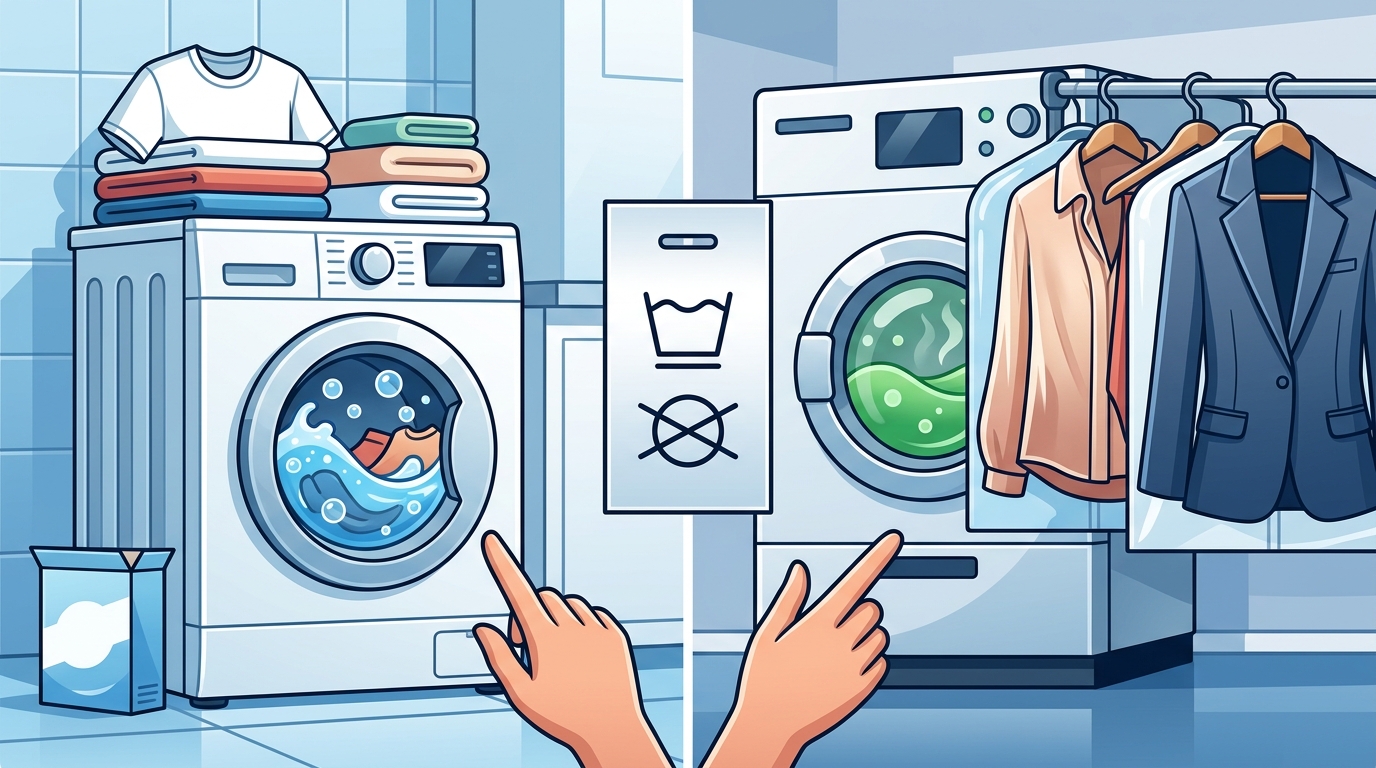
Standard laundry is the process of cleaning garments using water and detergent, either by hand or in a washing machine. It is the most common cleaning method for everyday clothing. Water dissolves water-soluble soils such as sweat, dirt, and food residue, while detergent lifts them from the fibres.
Professional laundry takes this a step further. It involves washing in water with detergents at controlled temperatures, followed by commercial-grade drying and pressing. This approach suits sturdy, everyday fabrics like cotton, linen blends, polyester, and denim. If you are a busy professional in Dubai, a dedicated laundry service saves hours every week.
What Is Professional Dry Cleaning?
Dry cleaning is a specialised garment-care method that uses a liquid solvent instead of water to remove stains and refresh fabrics. Despite the name, the process is not entirely "dry"; clothes are immersed in the solvent inside a sealed machine, then extracted and professionally pressed.
This solvent-based approach is ideal for delicate materials that cannot tolerate the agitation or moisture of a standard wash cycle. Silk, wool, cashmere, velvet, and heavily structured garments like suits all benefit from dry cleaning. At Whites, our couture service extends this care to high-fashion and designer pieces.
Why Solvent Matters
Traditional dry cleaning relied on perchloroethylene (perc). Modern providers increasingly use greener alternatives. Whites employs Lagoon technology by Electrolux, replacing up to 90% of traditional solvent work with an eco-friendly wet-cleaning system that is gentler on both garments and the environment.
Side-by-Side Comparison
| Factor | Standard Laundry | Professional Dry Cleaning |
|---|---|---|
| Cleaning Agent | Water + detergent | Chemical solvent (no water) |
| Best For | Cotton, polyester, denim, activewear | Silk, wool, cashmere, velvet, suits |
| Stain Strength | Water-based stains (coffee, juice, mud) | Oil-based stains (grease, makeup, salad dressing) |
| Risk of Shrinkage | Higher for natural fibres | Minimal |
| Colour Preservation | Moderate (risk of bleeding) | Excellent |
| Finishing | Tumble dry or line dry | Professional pressing and steaming |
| Environmental Impact | High water use | Low water, solvent dependent |
| Typical Cost (Dubai) | Lower per item | Higher per item |
Check the full Whites pricing page for transparent per-item rates on both services.
Fabric-by-Fabric Guide
Fabrics That Need Dry Cleaning
Silk is one of the most commonly dry-cleaned fabrics because it is protein-based, highly absorbent, and extremely sensitive to water and agitation. Wool fibres have a microscopic scale structure that causes them to felt and shrink when exposed to heat and water in a washing machine. Cashmere, velvet, and suede similarly require solvent-based care to maintain their texture.
Structured garments such as suits and blazers contain internal interlining that gives them shape. Water can destroy this structure, so dry cleaning is the only safe path. Embellished items with beadwork or sequins also belong at the dry cleaner; hand-stitched details can unravel in a standard wash. For wedding gowns and formal wear, explore the Whites wedding dress service.
Fabrics Safe for Standard Laundry
Cotton, most synthetics (polyester, nylon, spandex), and denim are sturdy enough to withstand water immersion and machine agitation. Athletic wear made from polyester and spandex blends specifically needs water-based detergents to strip bacteria that cause odour. Bedding and towels benefit from the high-temperature sanitisation that water provides.
When in Doubt
Always read the care label. A circle symbol means dry clean; a washtub symbol means the item can be washed. If a label says "dry clean only," that is the manufacturer's tested recommendation, not a suggestion. Following it protects both your garment and any warranty on the item.
Stain Removal: Which Method Wins?
Traditional laundry excels at water-based stains like coffee, juice, and mud. Dry cleaning is superior for oil-based stains like makeup, grease, and salad dressing. Professional cleaners have specialised pre-treatment techniques for both categories, which is why a premium service will assess stain type before selecting a method.
In Dubai's climate, perspiration stains are a daily concern. Standard laundry handles sweat effectively on cotton and synthetics, but perspiration on silk or wool is best treated with solvent to avoid water spots. A smart approach is to maintain both services: everyday items through wash and fold and delicates through dry cleaning.
Eco-Friendly Garment Care in Dubai
Sustainability is a growing priority in the UAE. Traditional dry cleaning solvents can be harmful to the environment, but greener alternatives now exist. Whites uses fully green Lagoon wet-cleaning technology along with biodegradable and recyclable packaging materials to reduce environmental impact without compromising on garment quality.
Wet cleaning is a professional process that uses controlled water-based systems with specialised detergents and computer-regulated agitation. It bridges the gap between standard laundry and traditional dry cleaning, offering effective results on many "dry clean only" items with a smaller ecological footprint. Learn more about the Whites commitment to sustainability.
Key Takeaways
- Standard laundry uses water and detergent; dry cleaning uses a chemical solvent with no water.
- Cotton, polyester, and denim are safe for laundry; silk, wool, cashmere, and velvet need dry cleaning.
- Laundry removes water-based stains best; dry cleaning excels at oil-based stains.
- Always check care labels before choosing a cleaning method to avoid shrinkage or colour loss.
- Structured garments like suits and blazers should always be dry cleaned to preserve their shape.
- Eco-friendly wet-cleaning technology, like the Lagoon system used by Whites, replaces up to 90% of traditional solvent work.
- Using the right method for each garment extends its lifespan by years.
Frequently Asked Questions
What is the main difference between laundry and dry cleaning?
The core difference is the cleaning agent. Laundry uses water and detergent, while dry cleaning uses a liquid solvent. This distinction determines which fabrics each method can safely handle.
Can I wash a "dry clean only" garment at home?
It is risky. "Dry clean only" is the manufacturer's tested recommendation. Washing such items at home can cause shrinkage, colour bleeding, or structural damage, especially with silk, wool, and cashmere.
Which method is better for removing stains?
It depends on the stain. Water-based stains like coffee and juice respond well to laundry. Oil-based stains such as grease, makeup, and food oil are better handled by dry cleaning solvents.
Is dry cleaning safe for the environment?
Modern providers have moved towards greener solutions. Whites uses Lagoon technology by Electrolux, replacing the majority of traditional solvent use with eco-friendly wet-cleaning processes and biodegradable packaging.
How often should suits be dry cleaned?
Suits can typically go three to five wears between cleanings unless visibly stained. Over-cleaning can wear out fibres, so spot-clean between visits where possible.
Does Whites offer pickup and delivery for both services?
Yes. Whites provides free next-day pickup and delivery across Dubai and Abu Dhabi for both laundry and dry cleaning orders. You can schedule a collection by calling 800WHITES or booking online.
What fabrics should never be dry cleaned?
Certain plastics, PVC, and polyurethane items can melt or distort in the dry cleaning process. Always inform your cleaner about unusual materials so they can select the safest method.
Is professional laundry worth the cost compared to washing at home?
Professional laundry uses commercial-grade equipment, precise temperature controls, and expert finishing that extend garment life. For busy Dubai residents, it also saves significant time each week.
Book Your Pickup Today
Whether your wardrobe needs a weekly wash and fold or specialist dry cleaning for delicate fabrics, Whites makes garment care effortless across Dubai and Abu Dhabi. Call 800WHITES (800 944 837) or schedule your free pickup online and enjoy next-day delivery at no extra charge.