
Understanding the distinction between standard laundry and professional dry cleaning is critical for preserving the longevity of your wardrobe. While both methods aim to clean garments, they utilize fundamentally different chemical processes and machinery. According to textile care experts, improper cleaning methods can cause up to 30% of fabric damage in high-end garments, making the choice of service provider a decisive factor in garment preservation. This guide breaks down the operational mechanics, chemical agents, and ideal use cases for each method to help you make informed decisions for your clothing. (Contact Us Whites)
Core Process Mechanics
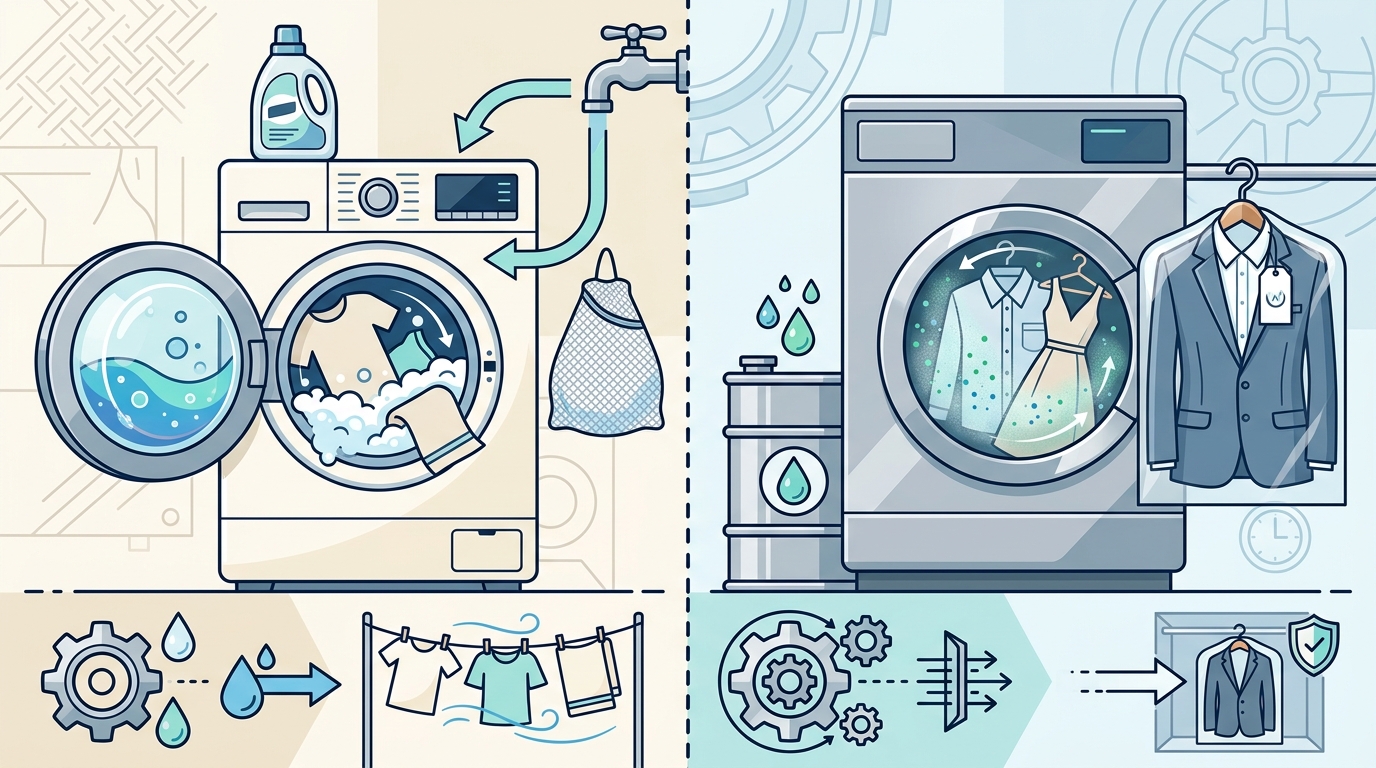
The fundamental difference lies in how water and agitation are utilized. Standard laundry relies on water as the primary solvent. Garments are submerged in a washing machine where detergent breaks down dirt, and mechanical agitation lifts stains from the fibers. This process is highly effective for cotton, linen, and synthetic blends that can withstand moisture and physical stress. (About Us Whites)
In contrast, dry cleaning does not use water. Instead, it uses liquid solvents to dissolve oils and grease. The garments are tumbled in a machine similar to a washer but filled with solvent rather than water. This method prevents the swelling of fibers that occurs with water, thereby maintaining the original shape and structure of delicate fabrics. Dry cleaning is defined as a cleaning process that uses chemical solvents instead of water to remove stains and dirt from fabrics.
Standard laundry is defined as the process of cleaning textiles using water, detergent, and mechanical agitation in a washing machine or by hand.
For everyday items like t-shirts, jeans, and bed linens, standard laundry is sufficient and cost-effective. However, for structured garments like suits, coats, and formal wear, the lack of water in dry cleaning prevents shrinkage and color bleeding. Whites Laundry in Dubai utilizes advanced sorting protocols to ensure that each garment receives the appropriate mechanical treatment based on its fiber content.
Chemical Agents and Solvents
The choice of solvent dictates the safety profile and cleaning power of the service. Traditional dry cleaning often utilized perchloroethylene (perc), a highly effective solvent for oil-based stains. However, due to environmental and health concerns, the industry has shifted toward greener alternatives. Modern professional cleaners now use hydrocarbon solvents or silicone-based fluids that are gentler on fabrics and safer for the environment.
Standard laundry detergents are formulated to work in water. They contain surfactants that lower the surface tension of water, allowing it to penetrate fibers and lift dirt. While effective for general grime, these detergents can be harsh on delicate dyes and natural fibers like silk or wool. Prolonged exposure to water and alkaline detergents can cause wool to felt, resulting in irreversible shrinkage and stiffening.
Professional services like those offered by Whites prioritize eco-friendly solvents. Their commitment to sustainability is evident in their use of fully green Lagoon technology by Electrolux. This technology replaces 90% of traditional dry-cleaning work with biodegradable and recyclable processes. This approach not only protects your garments but also minimizes the environmental footprint of the cleaning process.
Fabric Suitability and Care
Not all fabrics react well to water. Natural fibers like silk, wool, and cashmere are particularly sensitive to moisture. When these fibers get wet, they can lose their natural oils, leading to brittleness and loss of luster. Additionally, the weight of water-saturated delicate fabrics can stretch them out of shape during the spin cycle of a standard washer.
Professional dry cleaning is the preferred method for:
- Silk and Satin: These fabrics can lose their sheen and become water-spotted if washed in standard laundry.
- Wool and Cashmere: Water causes these fibers to shrink and felt. Dry cleaning preserves their softness and volume.
- Structured Garments: Suits, blazers, and coats have internal linings and padding that can warp or shift when exposed to water and heat.
- Embroidered and Beaded Items: The adhesive or stitching holding embellishments can dissolve or loosen in water.
Conversely, standard laundry is ideal for:
- Cotton and Linen: These durable fibers can withstand high temperatures and agitation.
- Synthetic Blends: Polyester and nylon are generally water-safe and quick-drying.
- Undergarments and Towels: Hygiene requirements for these items often necessitate the sanitizing power of hot water.
Whites' Green Technology Advantage
At Whites, the distinction between standard and dry cleaning is managed through a rigorous diagnostic process. Their "Care Label Geeks" inspect every item to determine the optimal cleaning path. This attention to detail ensures that couture pieces receive specialized care that goes beyond standard cleaning.
Whites offers a range of services tailored to specific needs. For those seeking convenience, the WASH+FOLD Bag service provides a smart bundle for weekly laundry needs. This service is designed for everyday clothing, offering a cost-effective solution for high-volume cleaning without the premium cost of dry cleaning.
For high-end garments, Whites provides Couture Services that handle designer pieces with exceptional care. This includes restoration of shoes and bags by craftsmen with years of expertise in high-end brands. Their Bridal Service ensures that wedding gowns are preserved with the utmost delicacy, preventing yellowing and fabric degradation over time.
The company's commitment to quality is further reinforced by their Green Laundry initiatives. By using biodegradable packaging and eco-friendly solvents, Whites aligns premium garment care with environmental responsibility. This is particularly important for clients in Dubai and Abu Dhabi who are increasingly conscious of sustainable practices.
Service Comparison Matrix
The following table summarizes the key differences between standard laundry and professional dry cleaning to aid in decision-making.
| Feature | Standard Laundry | Professional Dry Cleaning |
|---|---|---|
| Primary Solvent | Water | Chemical Solvents (e.g., Green Lagoon, Hydrocarbon) |
| Agitation Level | High (Mechanical Spin) | Low (Gentle Tumbling) |
| Best For | Cotton, Linen, Synthetics, Towels | Silk, Wool, Suits, Bridal, Couture |
| Shrinkage Risk | High for Delicates | Negligible |
| Stain Removal | Effective for Water-Soluble Stains | Effective for Oil-Based Stains |
| Turnaround Time | Same Day or Next Day | 2-Day Fast Track Available |
| Cost | Lower | Higher (Premium Service) |
Key Takeaways
- Water vs. Solvent: Standard laundry uses water, which can damage delicate fibers, while dry cleaning uses solvents to preserve fabric integrity.
- Fabric Sensitivity: Silk, wool, and structured garments require dry cleaning to prevent shrinkage and distortion.
- Eco-Friendly Options: Whites uses green Lagoon technology, reducing environmental impact by replacing 90% of traditional dry-cleaning work.
- Specialized Services: Couture, bridal, and shoe restoration require expert handling beyond standard laundry capabilities.
- Convenience: Whites offers free pick-up and delivery in Dubai and Abu Dhabi, making professional care accessible.
- Fast Turnaround: The 2-Day Fast Track service ensures timely delivery for urgent garment needs.
- Satisfaction Guarantee: Whites offers a redo service at no extra charge if you are dissatisfied with the results.
Frequently Asked Questions
Can I dry clean cotton garments?
While you can dry clean cotton, it is generally unnecessary and more expensive than standard laundry. Cotton is durable and water-safe, so standard washing is usually sufficient unless the garment has specific embellishments or a care label that mandates dry cleaning.
What is the WASH+FOLD Bag service?
The WASH+FOLD Bag is a bundled laundry service designed for everyday clothing. It allows you to submit a bag of mixed laundry for washing, drying, and folding at a competitive rate, ideal for weekly household needs.
How does Whites ensure garment safety?
Whites employs skilled textile professionals who inspect each item for care labels, stains, and fabric type. They use advanced machinery and eco-friendly solvents to ensure garments are cleaned without damage.
Is dry cleaning safe for the environment?
Traditional dry cleaning used harmful chemicals, but modern services like Whites use green technologies such as the Electrolux Lagoon system. This reduces environmental impact by using biodegradable and recyclable materials.
What is the turnaround time for dry cleaning?
Standard turnaround is typically 2-3 days. However, Whites offers a Free 2-Day Turnaround Time service for urgent needs, ensuring your garments are ready quickly.
Do you offer pickup and delivery?
Yes, Whites offers free pick-up and delivery services in Dubai and Abu Dhabi. You can book your order online or via WhatsApp for convenient collection from your doorstep.
Can you restore damaged shoes and bags?
Yes, Whites provides exclusive Shoes & Bag Cleaning & Restoration Couture Service. Their craftsmen specialize in restoring high-end brands to their original condition.
What areas do you serve?
Whites serves Dubai and Abu Dhabi, with multiple shop locations in prestigious malls such as The Dubai Mall, Dubai Hills Mall, and Mall of the Emirates.
Schedule Your Pickup
Preserving the quality and longevity of your wardrobe requires the right cleaning method for each garment. Whether you need routine laundry or specialized couture care, Whites offers premium services tailored to your needs. Experience the difference of professional garment care with free pick-up and delivery across Dubai and Abu Dhabi. Order Online today or call 800 WHITES to schedule your service.