
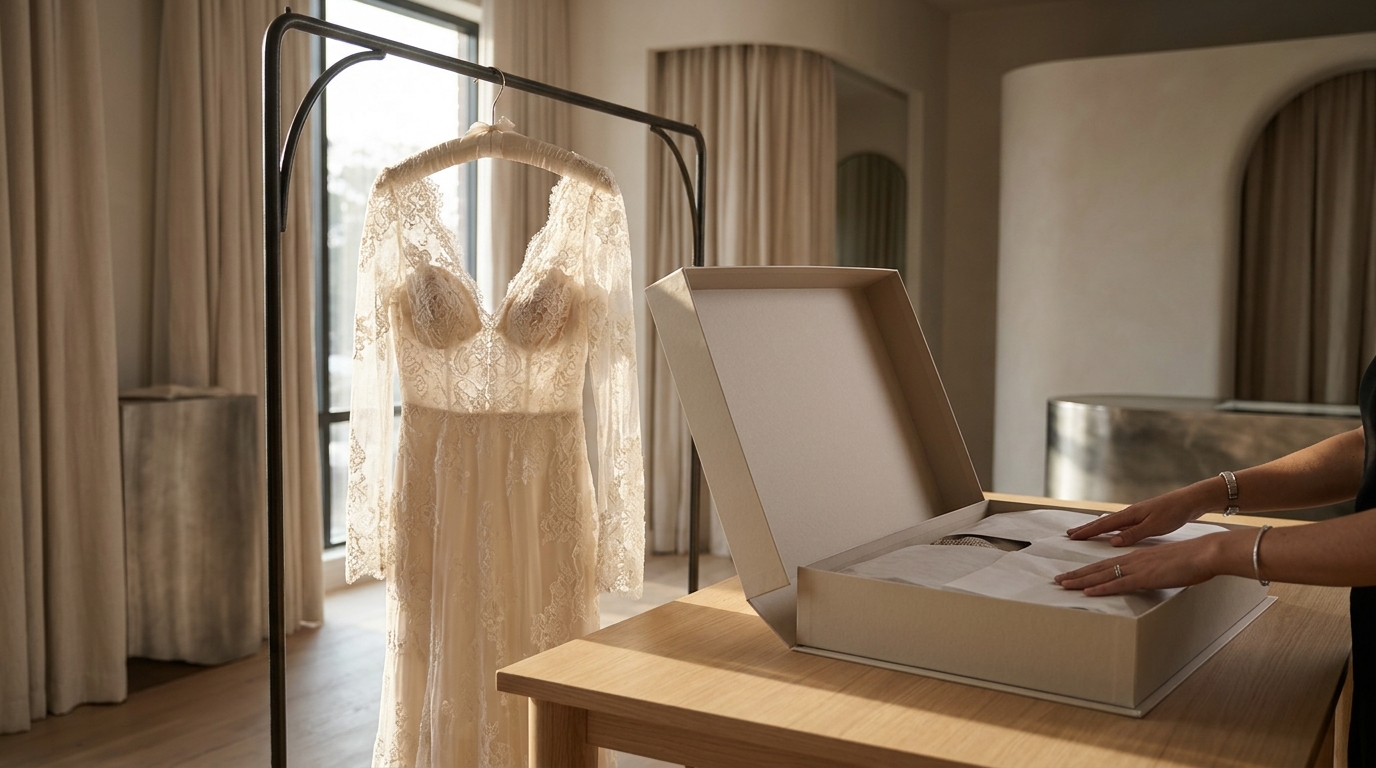
Choosing between dry cleaning and preservation depends on your timeline and storage goals. Dry cleaning is a one-time cleaning service that removes stains but does not protect the dress from long-term environmental damage. Preservation is a comprehensive archival process that cleans, repairs, and seals the gown in an acid-free box to prevent yellowing and fiber degradation. For brides in Dubai and Abu Dhabi who want to keep their dress safe for decades, preservation is the superior choice. Whites® offers both services, allowing you to select the level of protection that matches your needs.
Understanding Dry Cleaning for Wedding Gowns
Dry cleaning is a method of cleaning garments using a liquid solvent instead of water. This process is essential for removing oil-based stains, makeup, and food marks that water cannot effectively lift. For a wedding dress, dry cleaning is often the first step in any care routine. It addresses immediate dirt and grime, leaving the fabric looking fresh and clean. However, dry cleaning is a temporary solution. Once the dress is cleaned, it is returned to you, and you are responsible for its storage. Without proper archival packaging, the dress remains vulnerable to dust, light, and humidity.
Strengths of Dry Cleaning
The primary strength of dry cleaning is its ability to restore the visual appearance of the gown. It is a cost-effective option if you plan to wear the dress again in the near future or if you simply want it to look clean for a short-term display. It is also faster than full preservation, as it does not involve the complex steps of repair and sealing. For many brides, dry cleaning is a sufficient first step before deciding on long-term storage.
Limits of Dry Cleaning
The main limitation of dry cleaning is that it does not protect the dress from long-term damage. Once the dress is out of the cleaning facility, it is exposed to the elements. If stored in a regular plastic bag or a closet, the dress is at risk of yellowing, mold, and fiber breakdown. Dry cleaning does not include repairs for loose seams or missing beads, nor does it provide the acid-free environment necessary for archival storage. It is a cleaning service, not a preservation service.
Understanding Wedding Dress Preservation
Wedding dress preservation is a specialized archival process designed to protect the gown for generations. It goes far beyond simple cleaning. The process involves a thorough inspection, stain removal, minor repairs, and hand-finishing. After the dress is cleaned, it is wrapped in acid-free tissue paper and placed in a custom-made, acid-free box. This box is sealed to protect the dress from dust, light, and humidity. The goal is to create a stable environment where the fibers can rest without degrading.
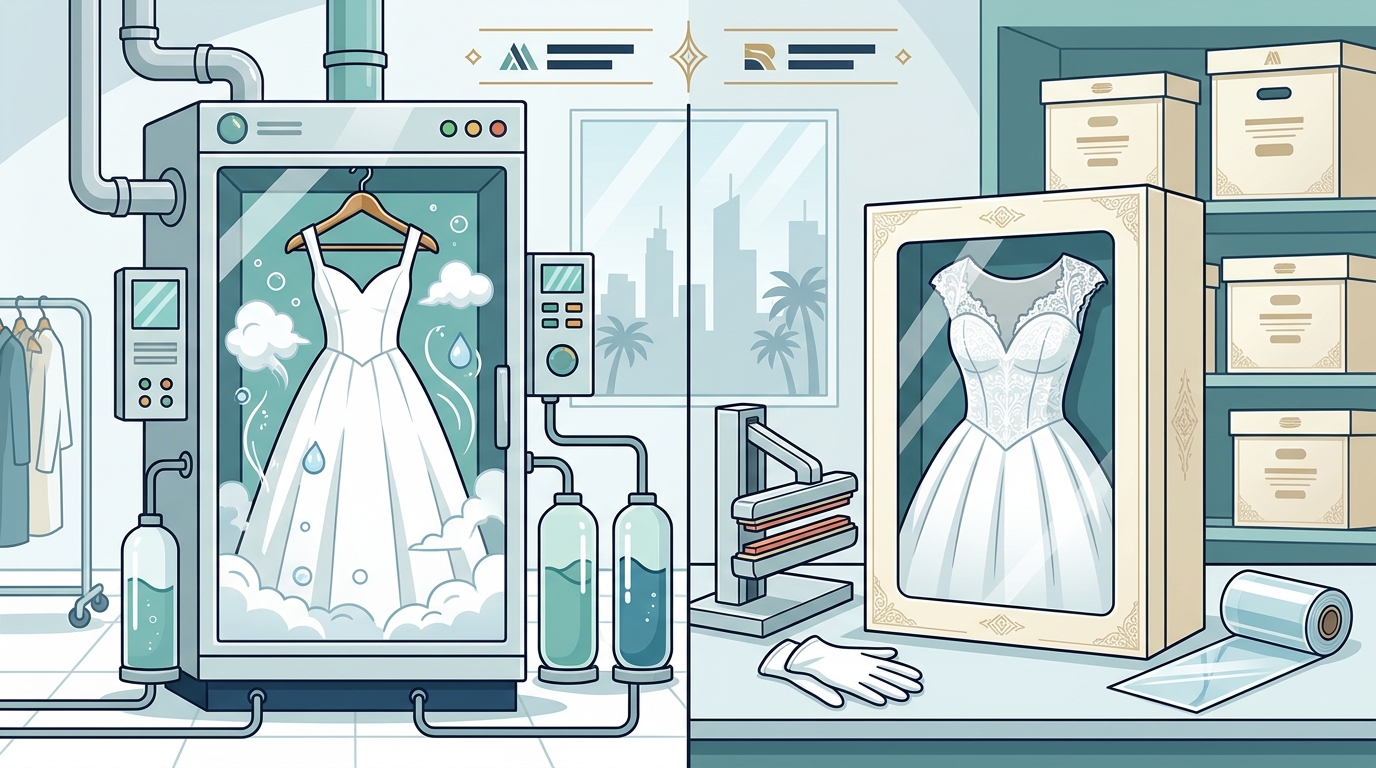
Strengths of Preservation
The greatest strength of preservation is long-term protection. By sealing the dress in an acid-free box, you prevent the chemical reactions that cause yellowing and brittleness. The process also includes minor repairs, such as reattaching loose beads or fixing open seams, ensuring the dress is in perfect condition before it is stored. Preservation is the only method that provides a complete solution for keeping a wedding dress safe for decades. It is the standard for brides who view their gown as a family heirloom.
Limits of Preservation
The primary limit of preservation is that it is a one-way process. Once the dress is sealed in the box, it is not meant to be worn again without breaking the seal and potentially compromising the archival environment. If you plan to wear the dress again, preservation may not be the right choice. Additionally, preservation is a more expensive service than dry cleaning, reflecting the additional labor and materials involved in the archival process. It is also a longer process, as the dress must be inspected, repaired, and carefully packaged.
Comparison Table: Dry Cleaning vs. Preservation
| Criteria | Dry Cleaning | Preservation |
|---|---|---|
| Primary Goal | Remove stains and dirt | Long-term archival protection |
| Storage Solution | None provided | Acid-free box and tissue |
| Repairs Included | None | Minor repairs (beads, seams) |
| Re-wearability | Yes, dress is ready to wear | No, dress is sealed for storage |
| Protection from Yellowing | No | Yes, via acid-free packaging |
| Best For | Short-term storage or re-wearing | Long-term heirloom storage |
Choose Dry Cleaning If...
Choose dry cleaning if you plan to wear your wedding dress again in the next few years. This is common for brides who want to wear their gown for a vow renewal, a holiday party, or a special anniversary. Dry cleaning ensures the dress is fresh and stain-free, ready for another occasion. It is also the right choice if you are on a tighter budget and do not require archival-level protection. If you plan to store the dress in a cool, dark, and dry place for a short period, dry cleaning is a sufficient and cost-effective option.
Choose Preservation If...
Choose preservation if you want to keep your wedding dress safe for decades or even generations. This is the ideal choice for brides who view their gown as a family heirloom. Preservation protects the dress from the environmental factors that cause long-term damage, such as light, humidity, and dust. It is also the right choice if your dress has minor damage, such as loose beads or open seams, that need to be repaired before storage. If you are not planning to wear the dress again and want to ensure it remains in pristine condition, preservation is the superior option.
Frequently Asked Questions
Can I switch from dry cleaning to preservation later?
Yes, you can. If you initially choose dry cleaning, you can later bring the dress back for preservation. However, the dress must be in good condition and free of new stains or damage. If the dress has been stored improperly and has started to yellow or develop mold, the preservation process may be more complex and may not fully reverse the damage. It is always best to choose the right service from the start.
Does dry cleaning remove all stains?
No, dry cleaning removes most common stains, but some stains, such as old wine or blood, may be permanent. The cleaning team will assess the dress and let you know if a stain cannot be removed. If a stain is permanent, it will be documented, and the dress will be cleaned as much as possible. Preservation does not guarantee the removal of all stains, but it ensures the dress is protected from further damage.
How long does preservation take?
Preservation typically takes longer than dry cleaning because it involves additional steps like inspection, repair, and packaging. The exact timeline depends on the complexity of the dress and the workload of the cleaning facility. It is best to allow extra time for preservation, especially if you want the dress ready for a specific date.
Is preservation worth the extra cost?
For most brides, yes. The extra cost of preservation is an investment in the long-term safety of your gown. If you want to keep the dress for decades, preservation is the only method that provides the necessary protection. If you are on a tight budget and do not plan to store the dress for a long time, dry cleaning may be a more affordable option. However, the risk of long-term damage without preservation is significant.
Can I preserve a dress that has been stored in a plastic bag?
Yes, but the dress may have already suffered some damage. Plastic bags can trap moisture and cause yellowing. The cleaning team will assess the condition of the dress and let you know if any damage is irreversible. Preservation will still protect the dress from further damage, but it may not fully restore the dress to its original condition.
Conclusion
Deciding between dry cleaning and preservation comes down to your long-term goals for your wedding dress. Dry cleaning is a practical choice for short-term storage or re-wearing, while preservation is the definitive solution for archival protection. At Whites®, we understand the importance of your gown and offer both services with the same level of care and expertise. Whether you choose to clean your dress for another occasion or preserve it for generations, our team is here to help you make the right decision. To discuss your options, contact our bridal specialists.