

If you have ever stared at a care label and wondered whether your garment needs a standard wash or a trip to the dry cleaner, you are not alone. The two processes look similar on the surface, but they rely on fundamentally different chemistry, equipment, and techniques. Choosing the wrong method can shrink a silk blouse or leave oil stains locked into a cotton shirt. In this guide we break down exactly how standard laundry and professional dry cleaning differ, which fabrics suit each method, and how to make the smartest choice for your wardrobe in Dubai and Abu Dhabi.
What Is Standard Laundry?
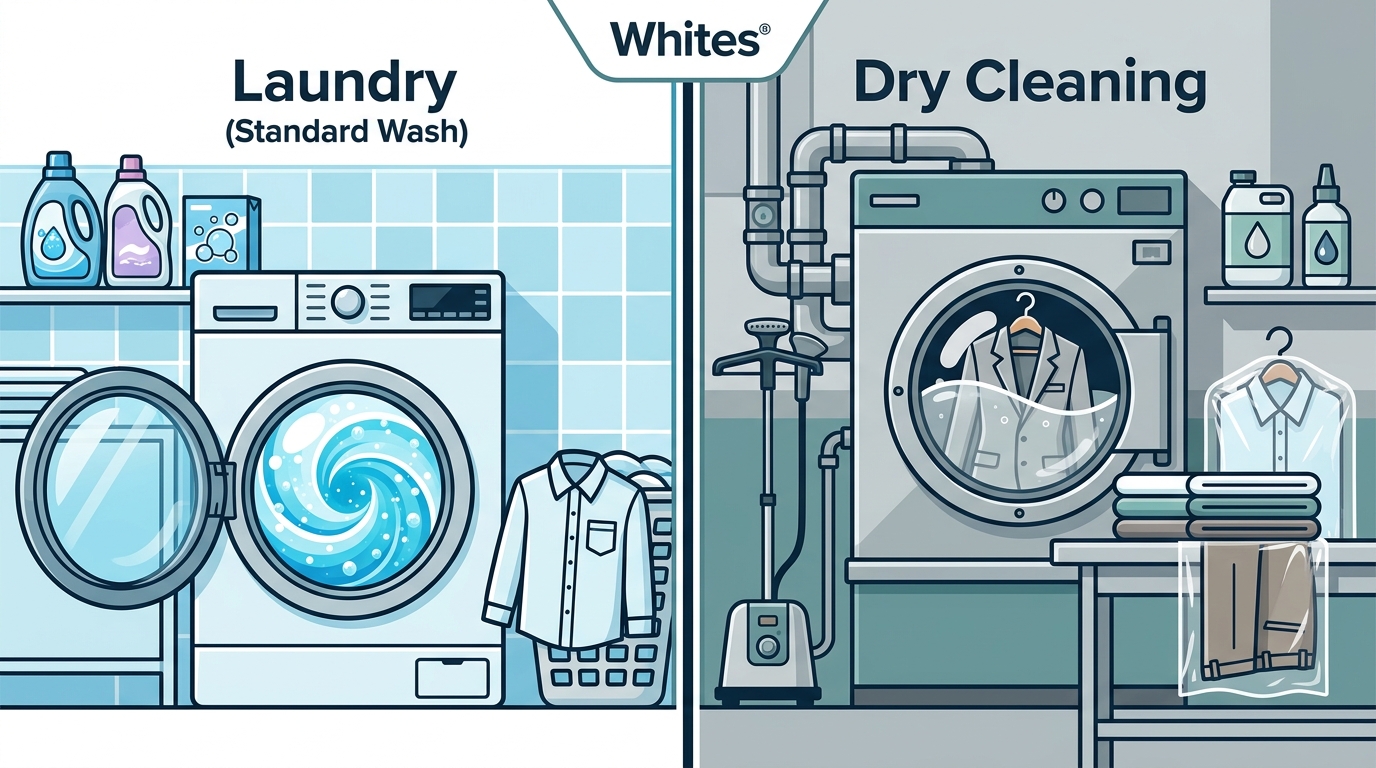
Standard laundry is the process of washing clothes using water and detergent, either by hand or in a washing machine. It is the most common cleaning method for everyday garments such as cotton t-shirts, jeans, bed linens, and athletic wear.
Professional laundry services elevate this process with commercial-grade machines, precise temperature controls, and expert finishing. At Whites, the Wash+Fold service handles an entire week's worth of daily clothing, returning items washed, dried, and neatly folded with next-day turnaround.
What Is Professional Dry Cleaning?
Dry cleaning is a garment-care method that uses a liquid chemical solvent instead of water to remove dirt and stains. Despite the name, the process is not completely "dry"; clothes are immersed in the solvent inside a specialised machine that gently agitates and then extracts the liquid.
Because water never touches the fabric, dry cleaning minimises the risk of shrinkage, colour bleeding, and texture damage. Items are then professionally pressed and steamed for a crisp finish. This makes it ideal for delicate or structured garments such as suits, silk dresses, and wedding dresses.
Side-by-Side Comparison
| Factor | Standard Laundry | Professional Dry Cleaning |
|---|---|---|
| Cleaning agent | Water + detergent | Chemical solvent (no water) |
| Best for | Cotton, linen, polyester, denim | Silk, wool, cashmere, velvet, structured suits |
| Stain strength | Excellent on water-soluble stains (sweat, mud) | Superior on oil-based stains (grease, cosmetics) |
| Shrinkage risk | Moderate to high on sensitive fibres | Very low |
| Colour preservation | Good with cold water | Excellent |
| Finishing | Tumble dry or line dry; optional press | Professional press and steam included |
| Turnaround (Whites) | Next day | Next day |
Which Fabrics Need Which Method?
Fabrics Safe for Standard Laundry
Cotton, most synthetics (polyester, nylon, spandex), and denim are sturdy enough for water-based washing. These fibres can tolerate machine agitation and moderate heat without losing shape.
Fabrics That Require Dry Cleaning
Silk, wool, cashmere, velvet, suede, and taffeta should be dry cleaned. Wool fibres have a microscopic scale structure that causes them to felt and shrink when exposed to heat and water. Silk is protein-based and extremely sensitive to water, heat, and agitation, meaning a home wash can cause shrinkage, dye bleeding, and loss of lustre.
When in Doubt, Check the Label
Care labels use standardised symbols: a circle means dry clean, while a washtub means machine washable. If a label reads "dry clean only," that is the manufacturer's tested recommendation. Bringing uncertain items to experienced textile professionals is always the safest option.
How Stain Type Affects Your Choice
Not every stain responds to the same chemistry. Water-soluble stains like perspiration, coffee, and mud wash out effectively with detergent and water during standard laundry. Oil-based stains from grease, cosmetics, or salad dressing, however, often resist water and require the solvent power of dry cleaning.
For delicate stained items, avoid rubbing the spot at home. Instead, get the garment to a professional as quickly as possible. Whites' Couture Service is specifically designed for high-value pieces that demand individual stain assessment and hand finishing.
Green Cleaning Technology in Dubai
Environmental impact is another factor worth considering. Traditional dry-cleaning solvents like perchloroethylene (perc) have raised health and ecological concerns for decades. Modern alternatives are changing the industry.
Whites uses Lagoon wet-cleaning technology by Electrolux, which replaces up to 90% of traditional dry-cleaning work with a water-based, biodegradable process. Lagoon technology is a professional wet-cleaning system that uses computer-controlled water, biodegradable detergents, and gentle mechanical action to clean garments that previously required chemical solvents. Combined with recyclable packaging, this approach delivers premium results with a significantly smaller environmental footprint.
Key Takeaways
- Standard laundry uses water and detergent; dry cleaning uses a chemical solvent with no water.
- Cotton, polyester, and denim are safe for laundry; silk, wool, cashmere, and velvet need dry cleaning.
- Oil-based stains respond better to dry cleaning, while water-soluble stains wash out in standard laundry.
- Always follow the care label; "dry clean only" is a tested recommendation, not a suggestion.
- Green technologies like Lagoon wet-cleaning can handle many "dry clean only" items without harsh solvents.
- Professional finishing (pressing and steaming) is standard with dry cleaning and elevates garment appearance.
- Next-day turnaround is available for both services at Whites in Dubai and Abu Dhabi.
Frequently Asked Questions
What is the main difference between laundry and dry cleaning?
The primary difference is the cleaning agent. Laundry uses water and detergent, while dry cleaning uses a liquid solvent to clean clothes without water. This makes dry cleaning safer for delicate or structured fabrics.
Can I machine wash a "dry clean only" garment at home?
It is risky. "Dry clean only" is the manufacturer's tested recommendation. Ignoring it can cause shrinkage, colour bleeding, or permanent texture damage, especially with silk, wool, and cashmere.
Is dry cleaning better for removing stains?
It depends on the stain. Dry cleaning excels at removing oil-based stains such as grease and cosmetics. Standard laundry is more effective for water-soluble stains like sweat and mud.
How often should suits be dry cleaned?
Most experts recommend dry cleaning a suit every three to four wears, or when it is visibly soiled. Over-cleaning can wear fibres down, so spot cleaning between visits helps extend garment life.
Is dry cleaning harmful to the environment?
Traditional solvents like perc can pose environmental and health risks. However, modern green alternatives such as Lagoon wet-cleaning technology use biodegradable detergents and dramatically reduce chemical usage.
Does Whites offer pickup and delivery for both services?
Yes. Whites provides free pickup and delivery across Dubai and Abu Dhabi for both laundry and dry-cleaning orders, with next-day turnaround at no extra cost.
What fabrics should never be dry cleaned?
Certain plastics, PVC, and polyurethane items can melt or distort during the dry-cleaning process. Always check the care label or consult a professional before proceeding.
How do I choose the right service for my wardrobe?
Start by reading each garment's care label. Use standard laundry for everyday cotton and synthetics. Choose dry cleaning for delicates, structured tailoring, and formal wear. If you need guidance, the textile specialists at Whites can assess any fabric and recommend the safest method. Learn more about choosing the best laundry service.
Get Expert Garment Care Today
Whether your wardrobe needs a simple wash and fold or specialist dry cleaning, Whites delivers premium results with next-day turnaround across Dubai and Abu Dhabi. Book a free pickup now and let our textile professionals take care of the rest.