

If you have ever stared at a care label and wondered whether your garment needs a standard wash or professional dry cleaning, you are not alone. The two processes look similar on the surface, but they rely on fundamentally different chemistry, equipment, and techniques. Choosing the wrong method can shrink a favourite suit or leave stubborn stains on a silk blouse. In this comparison we break down exactly how standard laundry and professional dry cleaning differ, which fabrics suit each method, and how to get the best results for your wardrobe in Dubai and Abu Dhabi.
What Is Standard Laundry?
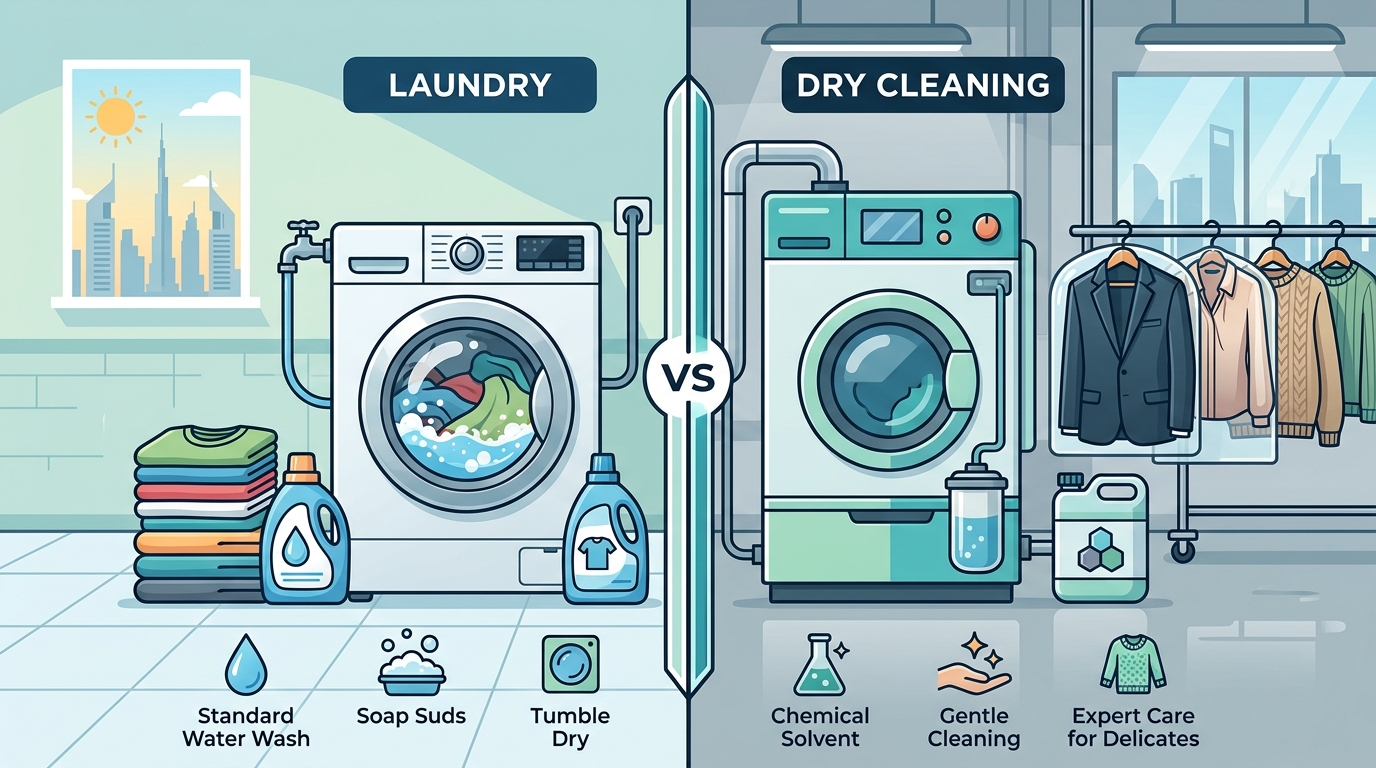
Standard laundry is the process of cleaning clothes using water and detergent, typically inside a washing machine. Water dissolves dirt while detergent lifts stains through agitation and heat. The garments are then tumble-dried or air-dried and pressed.
This method works best for durable, everyday fabrics. Cotton t-shirts, polyester blends, denim, bed linens, and athletic wear all respond well to water-based washing. If you need a convenient option in Dubai, the wash and fold service from Whites handles sorting, washing, drying, and folding so you do not have to.
What Is Professional Dry Cleaning?
Dry cleaning is a water-free cleaning process that uses chemical solvents to remove stains and dirt from fabric. The most common solvent historically has been perchloroethylene (perc), although greener alternatives are now widely adopted. After the solvent cycle, garments are professionally pressed and steamed for a crisp finish.
Because no water is involved, dry cleaning preserves the structure, colour, and texture of delicate materials. It is the recommended method for silk, wool, cashmere, and garments with intricate detailing. For high-value pieces, the couture cleaning service at Whites provides specialised handling from inspection to finishing.
Side-by-Side Comparison Table
| Factor | Standard Laundry | Professional Dry Cleaning |
|---|---|---|
| Cleaning agent | Water + detergent | Chemical solvent (no water) |
| Best fabrics | Cotton, polyester, denim, linen | Silk, wool, cashmere, structured suits |
| Stain strength | Water-based stains (sweat, dirt) | Oil-based stains (grease, makeup) |
| Shrinkage risk | Higher for delicate items | Minimal |
| Colour fading | Possible with frequent washes | Reduced significantly |
| Finish | Tumble-dried or pressed | Professionally pressed and steamed |
| Cost per piece | Lower | Higher due to specialised equipment |
Which Fabrics Suit Each Method
Fabrics for Standard Laundry
Everyday materials such as cotton, linen, polyester, and denim are durable enough for water-based washing. Bed sheets and pillowcases also benefit from the high-temperature sanitisation that water provides. Athletic wear made from spandex and polyester blends needs water-based detergents to strip away odour-causing bacteria.
Fabrics for Dry Cleaning
Suits and blazers should almost always be dry cleaned because water can destroy the internal interlining that gives a suit its shape. Silk and rayon often lose their lustre or shrink in water, while cashmere can pill with excessive agitation. Formal and wedding dresses with beading or embroidery also require solvent-based care.
Reading the Care Label
The simplest rule: always check the tag. A circle symbol means dry clean. A tub of water means machine washable. When in doubt, a professional cleaner can assess the fabric and choose the safest path.
Stain Removal: Water vs Solvent
Water and detergent excel at dissolving water-soluble stains such as sweat, mud, and food residue. Dry cleaning solvents, on the other hand, are far more effective at breaking down oil-based stains like grease, cosmetics, and salad dressing. Using the wrong method can actually set a stain permanently.
If you spill something on a delicate item, resist the urge to dab it with water. Instead, bring it to a trusted dry cleaner in Dubai as soon as possible. Speed matters more than home remedies when it comes to preserving expensive fabrics.
Cost and Garment Longevity
Standard laundry is less expensive on a per-piece basis, making it the practical choice for everyday clothing. Dry cleaning costs more because it requires specialised machines, chemical solvents, and skilled technicians. However, the investment pays off for premium garments.
Dry cleaning reduces colour bleeding, shrinkage, and fabric distortion, which means your high-value items last significantly longer. Over time, fewer replacements can offset the higher cleaning cost. You can view transparent pricing at Whites to compare laundry and dry cleaning rates side by side.
Key Takeaways
- Standard laundry uses water and detergent; dry cleaning uses chemical solvents without water.
- Everyday fabrics like cotton, denim, and polyester are best suited for laundry.
- Delicate and structured garments such as silk, wool, suits, and wedding dresses should be dry cleaned.
- Laundry handles water-based stains effectively, while dry cleaning excels at oil-based stains.
- Dry cleaning minimises shrinkage, fading, and shape distortion, extending garment lifespan.
- Always read the care label before deciding on a cleaning method.
- Professional services in Dubai and Abu Dhabi, like Whites, offer both options with pickup and delivery.
Frequently Asked Questions
What is the main difference between laundry and dry cleaning?
The primary difference is the cleaning agent. Laundry uses water and detergent, while dry cleaning uses a chemical solvent to clean clothes without water. This distinction determines which fabrics and stains each method handles best.
Is dry cleaning better than laundry?
Neither is universally better. Dry cleaning is superior for delicate fabrics and oil-based stains. Standard laundry is more effective for everyday wear, water-based stains, and odour removal. The right choice depends on the garment.
Can I wash a "dry clean only" garment at home?
It is risky. "Dry clean only" labels indicate the fabric may shrink, bleed, or lose shape in water. If you want to preserve the item, take it to a professional dry cleaner rather than experimenting at home.
Why does dry cleaning cost more than laundry?
Dry cleaning requires specialised equipment, chemical solvents, and expert handling. These factors drive costs higher compared to standard water-based washing. The trade-off is better fabric preservation and longevity for premium garments.
Which stains need dry cleaning?
Oil-based stains such as grease, makeup, butter, and salad dressing respond best to dry cleaning solvents. Water-based stains like sweat, coffee, and mud are usually handled well by standard laundry.
How often should I dry clean a suit?
Most experts recommend dry cleaning a suit every three to four wears, or whenever visible stains appear. Over-cleaning can wear out the fabric, so spot cleaning between visits is a good practice.
Does Whites offer both laundry and dry cleaning in Dubai?
Yes. Whites provides premium wash and fold, professional dry cleaning, couture care, and wedding dress cleaning across Dubai and Abu Dhabi with convenient pickup and delivery.
Is dry cleaning environmentally friendly?
Traditional solvents like perc have environmental concerns, but many modern cleaners now use eco-friendly alternatives. Whites, for instance, offers green laundry practices designed to reduce environmental impact.
Get Expert Garment Care Today
Whether your wardrobe needs a simple wash and fold or specialist dry cleaning, getting the method right protects your investment. Whites delivers both services across Dubai and Abu Dhabi with free pickup and delivery. Contact Whites today to schedule your first collection and experience the difference professional garment care makes.