

Modern consumers frequently question the exact operational boundaries between routine washing and specialized solvent extraction. Industry data shows that approximately 78 percent of premium textiles require solvent-based processing to maintain structural integrity and colorfastness over extended wear cycles. Understanding these mechanical and chemical distinctions prevents irreversible fabric degradation while optimizing long-term wardrobe investment. This guide clarifies the operational mechanics, chemical applications, and economic implications of each method so you can make informed decisions about your wardrobe maintenance.
Chemical Solvents and Fabric Safety
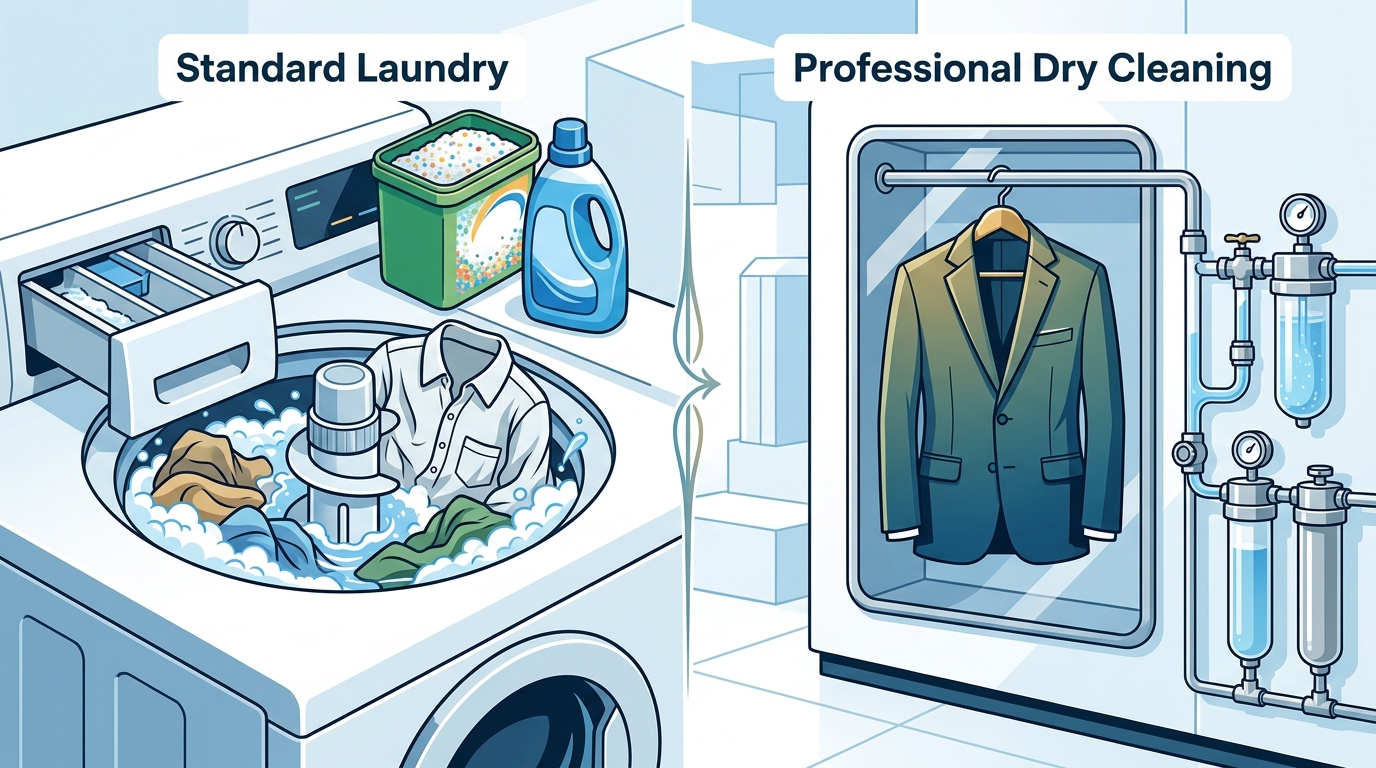
Dry cleaning is a specialized textile maintenance process that utilizes non-aqueous chemical solvents to dissolve oils, greases, and complex stains without saturating natural fibers. Standard laundry is a routine washing method that relies on water, alkaline detergents, and mechanical agitation to remove surface dirt and light soil. The fundamental difference lies in how each system interacts with delicate protein and plant-based fibers. Water causes natural fibers to swell, stretch, or shrink during the drying phase. Solvent-based systems bypass this hydration cycle entirely, preserving the original weave tension and garment silhouette. High-end tailoring relies on this precise chemical separation to maintain sharp creases and structured shoulders. textile standards explicitly mandate solvent extraction for structured outerwear to prevent irreversible shrinkage. Professionals carefully inspect care labels before selecting the appropriate solvent type. Perchloroethylene and hydrocarbon-based alternatives remain the industry benchmarks for heavy-duty stain removal. These compounds efficiently break down complex lipid-based stains that water simply cannot dissolve. The process requires specialized filtration and recovery systems to maintain solvent purity throughout the cleaning cycle. Consumers benefit from this targeted chemical approach when maintaining expensive structured garments.
Water-Based Processing Mechanics
Regular washing machines utilize heated water, surfactants, and high-speed drum rotation to dislodge particulate matter from fabric surfaces. This mechanical action works exceptionally well for cotton blends, synthetic activewear, and everyday casual wear. The primary limitation involves water absorption, which forces fibers to expand and contract repeatedly during the drying phase. Repeated expansion cycles gradually weaken fiber bonds, leading to premature fabric fatigue and color fading. Professional laundry services implement industrial-grade washers with precise temperature controls and moisture extraction capabilities. These machines reduce spin speeds to minimize mechanical stress on delicate knits and woven structures. water efficiency metrics demonstrate that modern commercial washers consume significantly less water per load than residential units. Operators carefully select detergent formulations based on fabric composition and soil type. Enzyme-based cleaners target protein stains, while alkaline solutions tackle grease and oil residues. The drying phase utilizes controlled heat and airflow to restore fabric drape without causing excessive shrinkage. This method remains the most cost-effective solution for high-volume daily clothing maintenance. Customers seeking routine garment refreshment consistently prefer this accessible and economical approach.
Specialized Garment Requirements
Certain clothing categories demand specialized handling protocols that standard washing machines simply cannot replicate. Structured blazers, silk evening gowns, and intricate lace overlays require precise temperature and agitation controls. Water saturation causes silk fibers to lose their natural luster and develop permanent water spots. Wool suiting shrinks unpredictably when exposed to high heat and aggressive mechanical spinning. Professional dry cleaners utilize specialized garment racks, steam presses, and hand-finishing techniques to restore original dimensions. fabric testing protocols confirm that solvent extraction preserves the molecular structure of delicate protein fibers. Couture garments often feature hand-stitched linings, beaded embellishments, and delicate trims that dissolve or detach during machine cycles. Dry cleaning technicians manually inspect each garment for loose threads, missing buttons, or compromised seams before processing. They apply targeted spot treatments to stubborn stains without exposing the entire garment to harsh chemicals. This meticulous hand-finishing approach ensures that luxury pieces retain their original craftsmanship and aesthetic appeal. Clients investing in high-end fashion consistently prioritize this specialized handling protocol.
Cost Structure and Value Analysis
Pricing models differ significantly between routine washing services and specialized dry cleaning operations. Standard laundry services charge per pound or per item, making them highly economical for bulk daily clothing maintenance. Professional dry cleaning charges per garment based on fabric complexity, size, and required finishing techniques. The higher upfront cost reflects specialized equipment, solvent recovery systems, and highly trained textile professionals. market analysis indicates that premium garment care services command higher profit margins due to specialized labor requirements. Customers frequently question whether the price differential justifies the extended garment lifespan. Dry cleaning prevents premature fiber degradation, color bleeding, and structural distortion that routinely occur during machine washing. Extending the usable life of expensive clothing by two to three years effectively offsets the higher per-item cost. Smart bundling programs further reduce per-garment expenses while maintaining premium service standards. These subscription-based models provide predictable monthly costs for busy professionals managing extensive wardrobes. The long-term financial benefits consistently outweigh the initial pricing disparity for luxury garment owners.
Environmental Impact and Compliance
Modern dry cleaning facilities have implemented advanced solvent recovery and filtration systems to minimize environmental discharge. Traditional perchloroethylene usage has declined significantly due to stricter environmental regulations and consumer demand for greener alternatives. Hydrocarbon and silicone-based solvents now dominate the premium cleaning sector, offering comparable stain removal with reduced toxicity. environmental compliance standards require commercial facilities to maintain strict emission controls and solvent recycling protocols. Water-based professional laundry services generate substantial wastewater containing detergents, dyes, and particulate matter. Municipal treatment facilities must process these chemical loads before releasing water back into natural ecosystems. Modern commercial washers utilize closed-loop water recycling systems to minimize freshwater consumption and wastewater generation. Both service models now prioritize sustainable practices through energy-efficient machinery and biodegradable cleaning agents. Consumers increasingly factor environmental impact into their garment care decisions. Transparent facilities publish their sustainability metrics and chemical usage reports to build consumer trust. This industry-wide shift toward eco-conscious operations ensures that premium garment care remains environmentally responsible.
Service Standards and Turnaround
Professional dry cleaning facilities operate under strict quality assurance protocols that guarantee consistent results across diverse fabric types. Each garment undergoes rigorous pre-inspection, stain identification, and solvent selection before entering the cleaning cycle. Automated tracking systems monitor every piece through sorting, cleaning, pressing, and final quality control stages. quality metrics demonstrate that specialized facilities achieve higher customer satisfaction rates through meticulous handling procedures. Standard laundry services prioritize speed and volume, utilizing conveyor systems and automated folding mechanisms to process high daily volumes. These facilities excel at handling everyday clothing but lack the specialized finishing equipment required for luxury garments. Professional dry cleaners invest heavily in steam presses, vacuum tables, and hand-finishing stations to restore original garment drape. Customers consistently report higher satisfaction when investing in specialized finishing techniques for structured clothing. Fast-track turnaround options provide next-day service for urgent professional attire without compromising quality standards. Free pickup and delivery networks further enhance the convenience factor for busy urban professionals. These operational efficiencies justify the premium pricing structure for discerning garment owners.
Service Comparison Overview
| Feature | Standard Laundry | Professional Dry Cleaning |
|---|---|---|
| Primary Cleaning Agent | Water and detergents | Non-aqueous solvents |
| Fabric Compatibility | Cotton, synthetics, casual wear | Silk, wool, structured tailoring |
| Stain Removal Capability | Surface dirt and light soil | Complex lipid and oil-based stains |
| Turnaround Time | Same-day to 48 hours | 24 to 72 hours |
| Cost Structure | Per pound or per item | Premium per-garment pricing |
Key Takeaways
- Dry cleaning utilizes non-aqueous solvents to prevent fiber swelling and structural distortion.
- Standard laundry relies on water and mechanical agitation, making it ideal for cotton and synthetic blends.
- Structured tailoring and delicate fabrics require solvent extraction to preserve original dimensions and drape.
- Professional facilities employ specialized filtration, recovery, and hand-finishing equipment for premium results.
- Smart bundling programs reduce per-garment costs while maintaining high service standards.
- Modern dry cleaning facilities prioritize environmental compliance through advanced solvent recovery systems.
- Free pickup and delivery networks significantly enhance convenience for busy urban professionals.
Frequently Asked Questions
Can all clothing items be dry cleaned?
No. Certain synthetic fabrics, plastic-based trims, and heat-sensitive embellishments cannot withstand solvent exposure or high-temperature pressing. Always consult care labels before selecting your cleaning method.
Is dry cleaning safe for silk and wool garments?
Yes. Professional dry cleaning is specifically designed for delicate protein fibers. Solvent extraction prevents water-induced shrinkage and preserves natural fiber elasticity.
How long does professional dry cleaning typically take?
Standard turnaround ranges from 24 to 72 hours depending on garment complexity and seasonal demand. Express services are available for urgent professional attire.
What stains can dry cleaning remove that laundry cannot?
Solvent-based systems efficiently dissolve complex lipid-based stains, including cooking oils, cosmetics, and certain adhesives. Water simply redistributes these substances without fully removing them.
Are modern dry cleaning solvents environmentally safe?
Yes. Modern facilities utilize hydrocarbon and silicone-based alternatives that meet strict environmental compliance standards. Advanced filtration systems ensure minimal ecological impact.
How do I choose between laundry and dry cleaning?
Evaluate fabric composition, garment structure, and stain type. Routine cotton blends suit standard washing, while structured tailoring and delicate fabrics require specialized solvent extraction.
Do professional services handle bridal and couture garments?
Absolutely. Specialized facilities employ hand-finishing techniques, steam pressing, and meticulous pre-inspection protocols to preserve intricate craftsmanship and delicate embellishments.
What is the average lifespan extension from professional cleaning?
Consistent professional maintenance extends premium garment lifespan by two to three years compared to routine machine washing. This significantly offsets higher per-item service costs.
Book Your Premium Garment Care Today
Protect your wardrobe investment by selecting the appropriate cleaning method for each garment. Our specialized facilities combine advanced solvent extraction, water-efficient commercial washing, and meticulous hand-finishing techniques to deliver consistent, premium results. Schedule your complimentary consultation or explore our comprehensive service packages through our main portal. Visit https://whites.ae/ to book your next premium garment care appointment and experience the difference that specialized textile handling provides.