

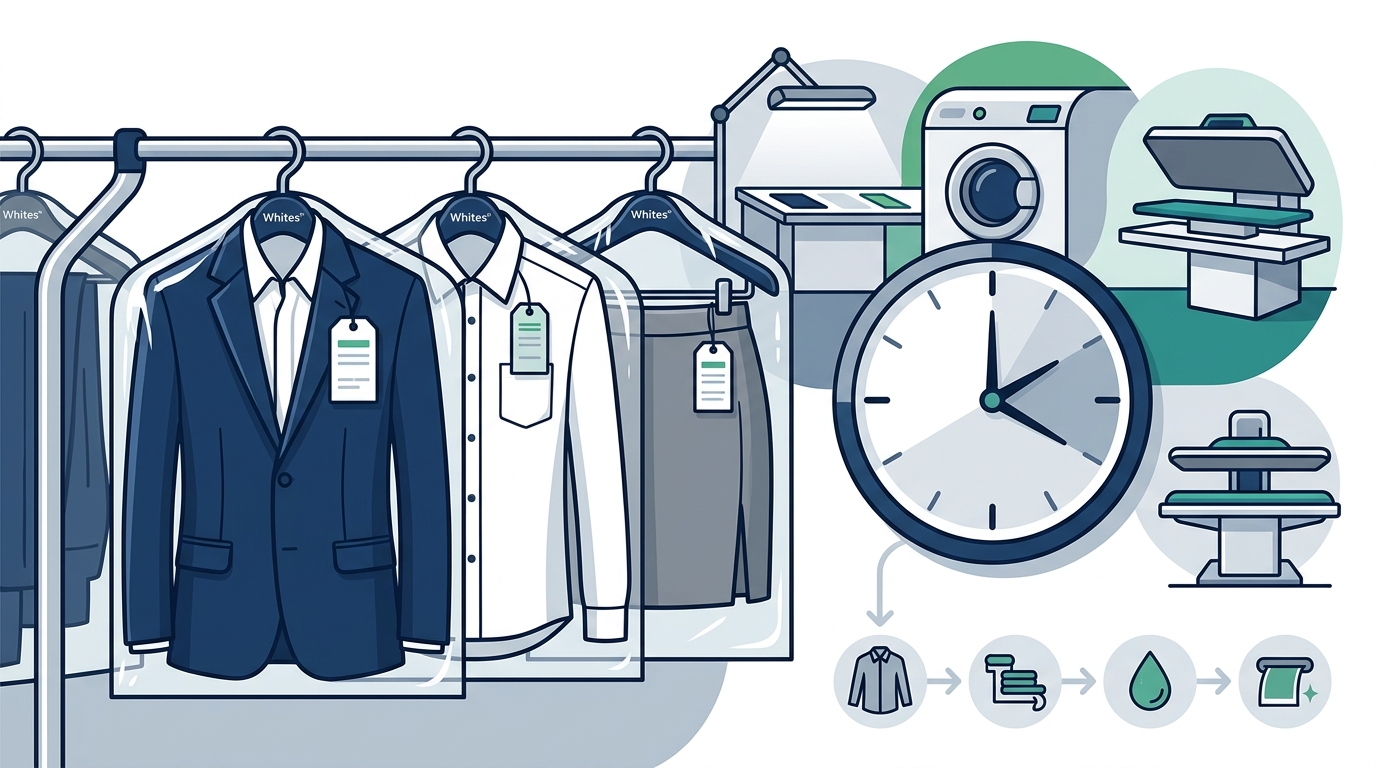
Modern consumers expect rapid garment care without sacrificing quality. Industry data shows that the average dry cleaning turnaround time typically ranges between twenty-four and forty-eight hours for standard items. This standard window allows technicians to properly inspect, sort, and process each garment using specialized solvents and equipment. Understanding these baseline metrics helps customers plan their wardrobe maintenance efficiently. Professional facilities in major metropolitan areas like Dubai and Abu Dhabi consistently maintain these benchmarks while handling high volumes daily. (Contact Us Whites)
Standard Processing Windows
Most commercial dry cleaners operate on a strict daily cycle. Garments arrive in the morning, undergo chemical or water-based cleaning, and are pressed before the evening dispatch. This workflow ensures consistent quality across thousands of weekly orders. Standard processing windows are engineered to balance speed with meticulous textile preservation. Customers requesting routine suit cleaning or blouse washing should expect next-day retrieval. Facilities that prioritize precision over speed often schedule additional quality checks during the drying phase.
Dry cleaning is a textile cleaning process that utilizes chemical solvents instead of water to remove stains and dirt. This method protects delicate fibers from shrinking or losing their original drape. Technicians carefully match solvent types to fabric compositions before initiating the wash cycle. The entire procedure requires precise temperature control and extended mechanical agitation to extract embedded oils.
Express Service Tiers
Urgent wardrobe needs frequently require accelerated handling protocols. Many premium providers now offer same-day or next-day rush options for an additional fee. This accelerated track bypasses standard queue sorting and assigns dedicated machine slots. Express service tiers guarantee priority handling for time-sensitive professional attire. Clients booking through digital platforms can often select exact pickup windows to match their schedules. The trade-off involves higher per-item costs and reduced flexibility for complex stain removal.
Express processing is an accelerated service tier that prioritizes specific orders for same-day or next-day retrieval. Facilities allocate specialized staff to monitor rush orders from intake to dispatch. Automated tracking systems update customers via SMS when garments reach specific processing stages. This transparency reduces customer anxiety and eliminates unnecessary phone inquiries. Business professionals frequently utilize these rapid turnaround options before important meetings or evening events.
Fabric-Specific Handling Protocols
Different textile compositions demand distinct chemical interactions and mechanical agitation levels. Delicate natural fibers require lower heat settings and extended drying cycles. Synthetic blends often process faster but require precise temperature calibration to prevent shrinkage. Fabric-specific handling protocols dictate the exact duration each garment spends in processing equipment. Heavy wool coats naturally require longer solvent extraction periods compared to lightweight cotton shirts. Technicians must manually inspect each piece before selecting the appropriate cleaning matrix.
Quality control is a mandatory inspection phase where technicians verify stain removal, fabric integrity, and pressing precision before dispatch. This final review prevents customer complaints and protects brand reputation. Automated pressing machines utilize steam injection and vacuum suction to restore original garment shapes. Manual finishing touches address collars, cuffs, and intricate buttonholes that machines cannot reach. These meticulous steps ensure every piece meets premium service standards.
Regional Climate Impacts
Environmental conditions directly influence drying efficiency and final garment presentation. High ambient humidity forces machines to run extended cycles to extract residual moisture. Arid desert climates accelerate evaporation rates, allowing faster turnaround for most textile types. Regional climate impacts require facilities to adjust machine parameters daily. Dubai and Abu Dhabi locations frequently optimize their drying chambers to counteract extreme summer temperatures. These environmental adjustments ensure consistent fabric integrity across all seasonal collections.
Facilities operating in arid regions report faster solvent evaporation during the drying phase. This natural advantage reduces energy consumption and shortens overall processing times. Technicians monitor ambient humidity sensors to automatically adjust machine settings. Consistent environmental control prevents moisture retention that could lead to mildew development. Proper climate management remains essential for maintaining premium garment care standards.
Value Bundles and Scheduling
Subscription-based laundry models have fundamentally changed how customers approach garment maintenance. Weekly subscription packages allow households to batch multiple items into single processing runs. This bulk approach reduces per-unit costs while maintaining predictable delivery schedules. Value bundles and scheduling provide predictable pricing for recurring household needs. Customers can pre-select specific drop-off days to align with their work routines. The system automatically tracks order volumes and optimizes machine loading for maximum efficiency.
Digital ordering platforms integrate seamlessly with warehouse management software to streamline logistics. Customers receive real-time notifications when their order reaches specific processing milestones. Automated routing algorithms assign the nearest service center to minimize transit times. This technological integration reduces administrative overhead and improves overall service reliability. Households benefit from consistent pricing and predictable delivery windows throughout the year.
| Service Tier | Typical Timeline | Best Use Case | Link to Details |
|---|---|---|---|
| Standard Cleaning | 24 to 48 hours | Regular wardrobe rotation | View Pricing |
| Express Processing | Same day or next day | Urgent professional events | Explore Couture |
| WASH+FOLD Bag | 3 to 5 business days | Weekly household laundry | Order Online |
| Bridal & Couture | 5 to 10 business days | Delicate heirloom garments | Learn About Us |
Key Takeaways
- Standard dry cleaning turnaround time averages between twenty-four and forty-eight hours for routine items. (140 Dry Cleaning)
- Express services guarantee next-day retrieval for an additional premium fee.
- Heavy wool coats require extended solvent extraction compared to lightweight cotton blends.
- High ambient humidity forces machines to run longer drying cycles to prevent moisture damage.
- Subscription packages optimize machine loading and reduce per-unit processing costs.
- Premium facilities in Dubai and Abu Dhabi maintain strict daily quality inspection protocols.
- Digital booking platforms enable precise pickup scheduling aligned with professional calendars.
Frequently Asked Questions
How long does dry cleaning take for a standard suit?
A standard suit typically requires twenty-four to forty-eight hours for complete processing. This timeframe includes initial inspection, solvent cleaning, pressing, and final quality checks.
Can I get my clothes cleaned the same day?
Yes, most premium facilities offer express processing for an additional fee. Rush orders bypass standard queue sorting and receive dedicated machine allocation.
Why do heavy coats take longer to process?
Heavy coats contain dense insulation and multiple layers that retain moisture longer. Technicians must extend drying cycles to prevent internal dampness and odor retention.
Does humidity affect dry cleaning timelines?
High humidity forces machines to run extended cycles to extract residual moisture. Facilities in arid regions like the UAE naturally experience faster evaporation rates.
What is the difference between dry cleaning and wash and fold?
Dry cleaning uses chemical solvents for delicate fabrics, while wash and fold utilizes water-based cycles for everyday cotton blends. Each method follows distinct processing timelines based on fabric composition. (How Long does)
How do subscription bundles impact delivery schedules?
Subscription packages batch multiple items into single processing runs. This bulk approach reduces per-unit costs while maintaining predictable weekly delivery windows.
Do premium facilities offer free pickup and delivery?
Many high-end providers include complimentary logistics within designated service zones. Customers can schedule exact pickup windows through digital ordering platforms.
Ready to Optimize Your Wardrobe Maintenance?
Professional garment care requires precise timing, specialized equipment, and experienced textile technicians. Book your first order today and experience the efficiency of modern dry cleaning. Visit our main portal to explore pricing tiers, schedule a complimentary pickup, or request a custom consultation for delicate couture pieces. Secure your preferred delivery window now and reclaim your weekends.